

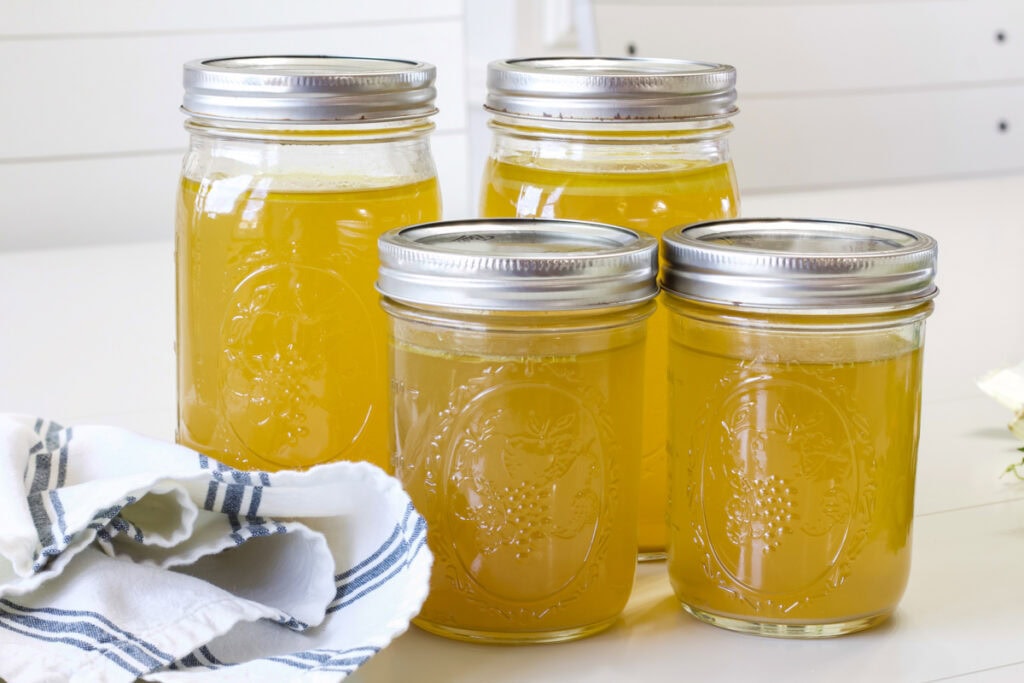
Don’t throw away those leftover chicken bones from your whole chicken. Turn them into a rich and flavorful Slow Cooker Chicken Stock. It’s simple to make and so much better than store-bought. You’ll get a rich, homemade stock with minimal effort—perfect for soups, sauces, and everyday cooking.
Jump to:
- Homemade Chicken Stock
- Why You Should Make Slow Cooker Stock
- Ingredient Photo: Slow Cooker Chicken Stock
- Ingredient Notes for Slow Cooker Chicken Stock Recipe
- Stock vs Broth: What’s the Difference?
- Health Benefits of Chicken Stock
- How to Make Chicken Stock in a Slow Cooker
- Pro Tips
- How to Store Chicken Stock
- Can You Freeze Chicken Stock
- Frequently Asked Questions
- Slow Cooker Chicken Stock Recipe
Homemade Chicken Stock
Making a slow cooker version is an easy way to create rich stock with very little effort. I’m all for tossing everything in the slow cooker and ending up with a delicious stock that’s ready when I am!
There is no babysitting required here—you won’t have to watch the liquid slowly simmer away or keep adding water as it cooks like you often do with stove top stock. And since the slow cooker stays at a gentle temperature, you can skip the extra step of skimming foam from the top as it cooks.
It’s a true set-it-and-forget-it recipe. I like to start a batch before I go to bed so it’s ready the next day for me to strain and store.
Why You Should Make Slow Cooker Stock
Making homemade stock is easier than you think and a great way to get more from your cooked chicken. Using a slow cooker makes the process even simpler because it’s a hands-off approach.
Reduce waste. Instead of throwing away the leftover bones from last night’s chicken dinner, use them to make a rich, flavorful stock.
Control the ingredients. When you make it yourself, you decide exactly what goes in.
Save money. Making your own stock turns something you might normally throw away into several cups of stock you can use in many different dishes.
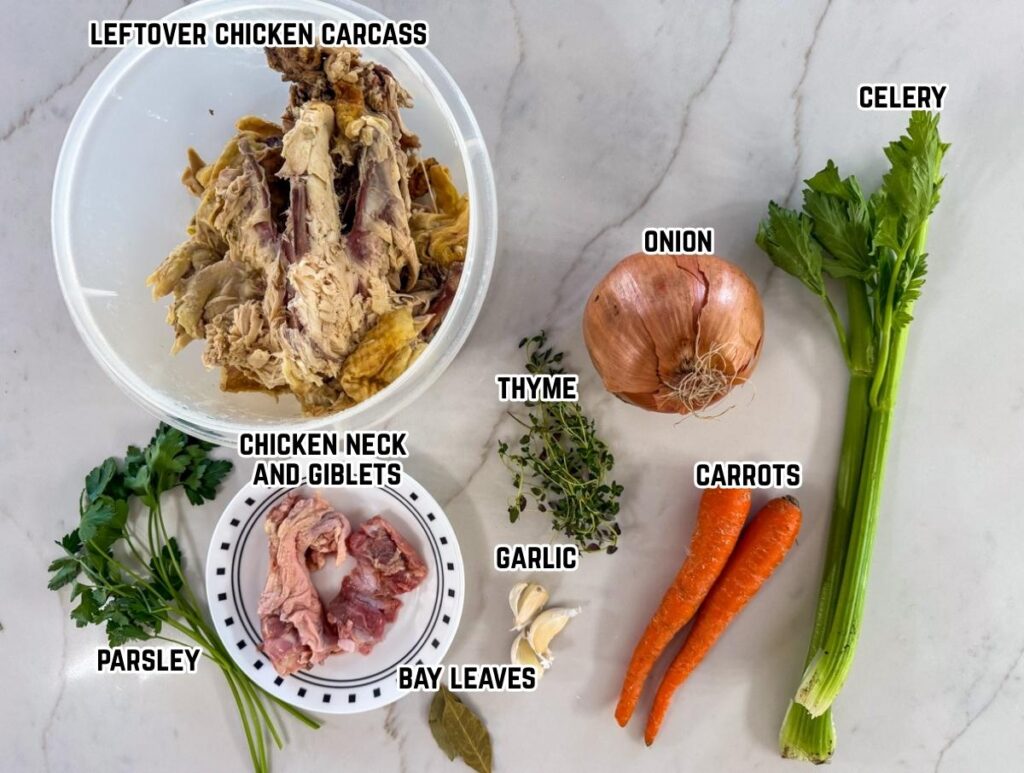
Ingredient Photo: Slow Cooker Chicken Stock
Ingredient Notes for Slow Cooker Chicken Stock Recipe
Chicken Carcass: I use the leftover whole carcass from my Lemon Thyme Chicken Roast Chicken, Crockpot Whole Chicken, or Roasted Chicken and Potatoes. You can also use the carcass from a store-bought rotisserie chicken.
Onion: A simple yellow onion works perfectly and adds great depth of flavor.
Celery: Celery adds classic broth flavor. Leave the leafy tops on the celery stalks—they add even more flavor.
Carrots: Carrots add subtle sweetness along with beautiful color.
Garlic: Whole smashed garlic cloves are perfect for adding gentle garlic flavor.
Herbs: Fresh thyme, fresh parsley, and a couple of dried bay leaves adds to the earthy flavor of the stock.
Stock vs Broth: What’s the Difference?
While many home cooks use these liquids interchangeably, the primary difference lies in the body and the ingredients.
Stock is all about the bones. By simmering bones, cartilage, and skin you extract collagen which transforms into gelatin. This make the stock a silky and rich with a deep, savory foundation.
Broth is made by simmering actual meat. This results in a liquid that is lighter, thinner, and more subtly flavored. Because broth is often seasoned during the cooking process, it’s usually ready to sip straight from the pot.
Both versions typically include a mix of aromatic vegetables and herbs to round out the profile. In most recipes—especially quick weeknight meals—you can easily swap one for the other without changing the flavor of a dish.
Health Benefits of Chicken Stock
We all know a good chicken stock is amazing in soups and other dishes, but it’s kind of a nutritional powerhouse, too.
When you let those bones simmer away slowly, they release all sorts of goodness like collagen and gelatin. It’s actually liquid gold for your joints and digestion. Plus, those same nutrients are famous for giving your skin that healthy, hydrated glow. Yes, please!
Beyond the fancy amino acids, homemade stock is packed with minerals like magnesium and potassium. There is a reason we all reach for a bowl of chicken soup when we’re feeling under the weather! That warm liquid is so soothing on a sore throat, and it can help clear things out when you’re feeling congested.
The best part of making it at home? You get to control exactly what goes in, which means you can cut out the sodium without losing any of that rich, cozy flavor.
How to Make Chicken Stock in a Slow Cooker
Jump to RecipeFollow along with these step-by-step photos, then scroll (or jump) down to the recipe card with exact measurements and more detailed instructions.
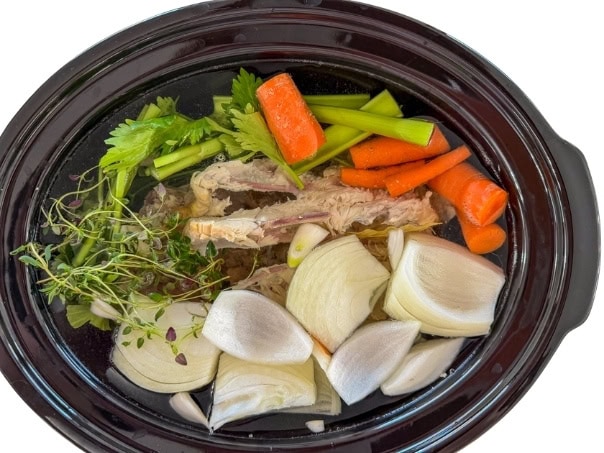
Add the ingredients. Place the chicken carcass, vegetables, herbs, and water into the crock pot.
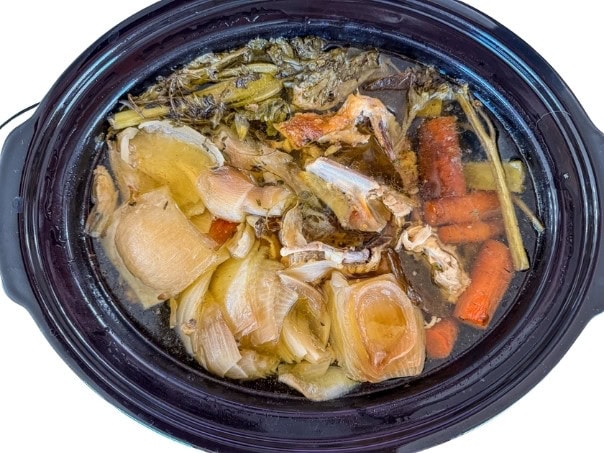
Cook the stock. Cover and cook on low heat for 12–14 hours.
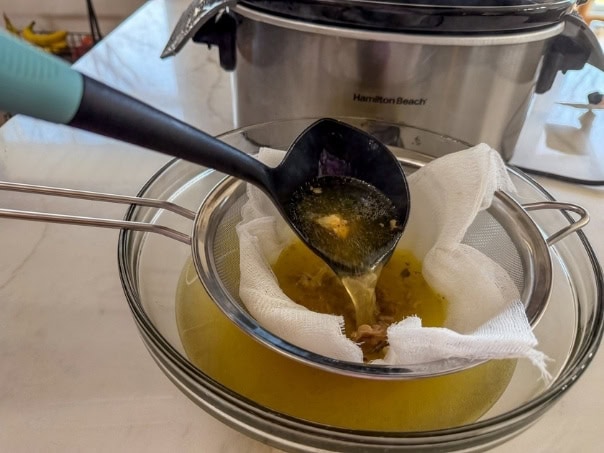
Strain the stock. Carefully strain the stock through a fine mesh strainer lined with cheesecloth to remove the bones and vegetables.
Pro Tips
- Save the neck and giblets when cooking the chicken—they add extra flavor to the stock.
- Don’t clean the bones completely; leaving a little meat on them boosts the richness of the stock.
- If you’re not using the carcass and chicken parts right away, you can refrigerate them for up to 3 days or freeze them for several months.
How to Store Chicken Stock
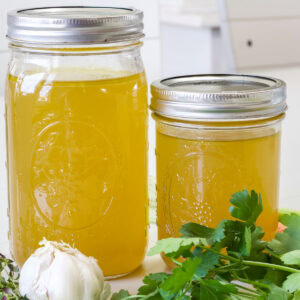
Store homemade slow cooker chicken stock in an airtight container in the fridge for up to 5 days.
Can You Freeze Chicken Stock
Yes! Homemade chicken stock freezes well and keeps for 6 months to a year. Let it cool, pour into freezer-safe containers – or use iced cube trays for smaller portions- and freeze. Perfect for soups, sauces, or anytime you want rich, homemade flavor in a flash!
Frequently Asked Questions
Bone broth is very similar to stock, but it’s usually simmered longer and often includes a splash of regular or apple cider vinegar to help extract more collagen, resulting in a richer, more gelatinous broth.
Absolutely! Slow cookers are one of the easiest, most hands-off ways to make chicken stock, and they produce a clear, flavorful result every time.
A 6-quart slow cooker works well for making homemade chicken stock. It’s large enough to hold a chicken carcass, vegetables, and enough water to cover everything without overflowing. I use a 6-quart and typically end up with about 9–10 cups of finished stock.
For best results, cook chicken stock in the slow cooker on low so it stays at a gentle simmer. Cooking on high can make the stock boil, which may result in a cloudy, greasy, or less flavorful stock.
Chicken stock can be cooked in the slow cooker on low for anywhere from 8 to 24 hours. You’ll get a good stock at 8 hours, but I find 12–14 hours gives the best flavor. You can go up to 24 hours if you want, but it’s not necessary.
Follow me on social for more deliciousness!
Did you love this recipe?
We would love it if you’d leave a comment and ⭐️⭐️⭐️⭐️⭐️ review below!
Slow Cooker Chicken Stock Recipe
Equipment
- slow cooker
- fine mesh strainer
- cheesecloth
Ingredients
- 1 chicken carcass (with skin), plus uncooked neck and giblets
- 1 onion
- 2 ribs celery with leafy tops
- 2 carrots
- 3 cloves garlic
- 2 bay leaves
- 4 sprigs fresh thyme
- 4 sprigs fresh parsley
- 12 cups water
Instructions
- Prepare the vegetables: Roughly chop the onion, celery and carrots. Smash the garlic cloves.
- Add the ingredients: Place the chicken carcass, skin, neck, organs, vegetables, herbs, and water into the crock pot.
- Cook the stock: Cover and cook on low heat for 12–14 hours.
- Strain the stock: Use tongs to remove the larger bones and vegetables, then scoop out smaller pieces with a slotted spoon. Carefully strain the stock through a fine mesh strainer lined with cheesecloth into a large bowl or pitcher.
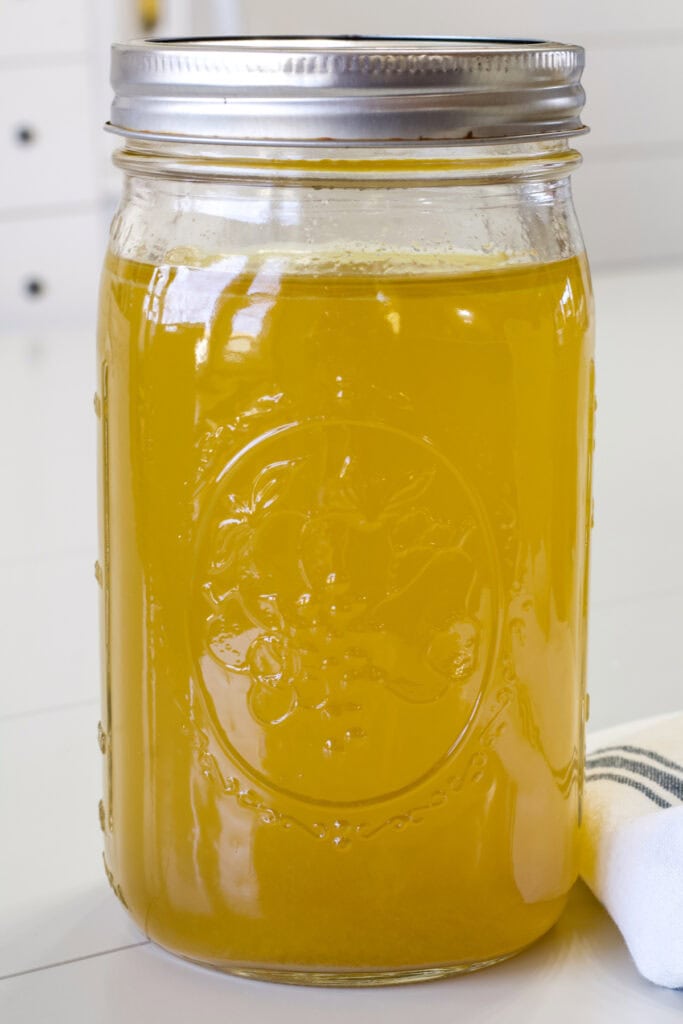
- Store the stock: Pour the strained broth into containers such as mason jars, let cool to room temperature before refrigerating or freezing.
- Skim off the chicken fat: After the stock is cold the fat can easily be skimmed off the top.
About Mindy
Mindy has been cooking for over 30 years, starting as a young mother who learned how to create delicious meals on a budget. Today, she shares approachable recipes made with everyday ingredients that are easy, affordable, and family-friendly. Her goal is to show that great food doesn’t need to be complicated or expensive.